16:10 Image (download from Admin › News & Knowledge)
11 most notable changes in Google Ads in 2019
1: Discontinuation of average position metric
Google announced in February that average position would be removed early this year. By October 2019, Google officially removed this metric from Google Ads reports. Instead of average position, Google advised advertisers to switch to position metrics – top search impression share and absolute top search impression share – introduced last year. Google introduced several new metrics: % Impr. (Abs. Top) %, % Impr. (Top), and Search Impr. Share %. – % Impr. (Top) Top impression share is the percentage of your impressions that appear anywhere above organic search results. – % Impr. (Abs. Top) % Absolute top impression share is the percentage of your impressions that appear as the first ad above organic search results.
2. Google expands phrase match and broad match modifier variants
Following the exact match format change last year, Google continues to expand the trigger scope for phrase match and broad match modifier formats this year. Google's reason for this change is that search queries and machine learning have evolved to the point where they can fill those gaps for advertisers. Google states that 15% of their daily searches are new – and advertisers will miss these new queries if matching is controlled too tightly.Broad match modifier keywords (Broad match modifier editing tool)
Previously, broad match modifier keywords could show when someone's search included the words you marked with a plus sign, or close variants of these phrases. Close variants include: misspellings, singular and plural forms, abbreviations/acronyms, and root word variants, synonyms, or other variations of those words. Now, variants will also include queries with similar meaning.
Phrase match
Phrase match will be triggered with close variants where word order must be in the correct sequence, but now they can also appear on queries with the same meaning. To keep keywords matching queries from competing with each other, Google is implementing keyword selection option changes. If a query currently matches an exact match, phrase, or broad match modifier keyword existing in your account, Google will prevent that query from matching another phrase or modified broad match keyword currently qualifying in the same auction.
Google states they expect advertisers using phrase and broad match modifier tools to see an additional 3-4% clicks and conversions for those keywords, with an average of 85% of those clicks coming from queries not currently in the activated keywords.
3. New Audiences for Search Advertising
After two groundbreaking changes that transformed many things, let's welcome the good news Google announced in mid-October: the search network launched shared interest audiences and seasonal event segments for in-market audiences.3.1 Shared Interest Audiences:
For those familiar with display advertising, shared interest audiences are a group of consumers who have demonstrated interest in (or engagement with) a specific topic. Additionally, Google can create these audiences by considering factors such as search history and frequently visited websites. By organizing shared interest audiences, you'll be able to optimize your search campaigns and focus on potential customers who aretrulyinterested in what you're selling. For example, suppose you're a marketer at a natural cosmetics company. Traditionally, you would reach relevant consumers by targeting keywords like "organic makeup". Next, you could increase ROI by ranking the Beauty & Health interest audienceabovethose keywords.
3.2. Seasonal Event Segments for In-Market Audiences
In recent years, several tools have helped search advertisers increase conversion rates like in-market audiences. With in-market audiences, you can limit the reach of your adsexclusivelyto users who are actively searching for products or services like yours. If I spend months completing search queries such as used Honda sedan and visiting websites like Cars.com, Google can reasonably assume I fall into the Automotive & Vehicles in-market audience. Therefore, car dealerships and insurance providers can easily connect with consumers like me, who clearly have an interest in purchasing a car or something car-related.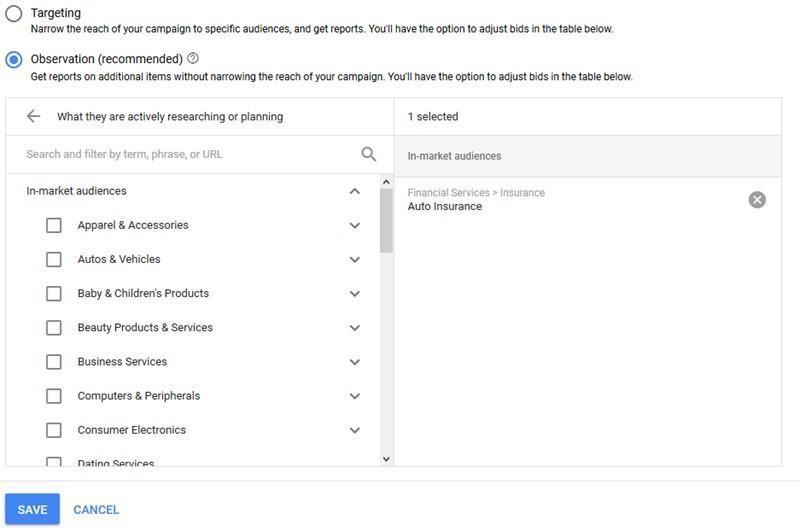 During the holiday season, seasonal event segments will allow you to connect with consumers who are actively researching a product or serviceto preparefor a specific occasion. Because you knowwhyconsumers grouped in a specific segment are searching for a business like yours, you'll be able to optimize your messaging more easily than ever.
4. Audience expansion tool
What I found to be the most interesting announcement from Google Marketing Live 2019: the audience expansion tool. Similar to Facebook's lookalike audiences, the audience expansion tool allows you to grow your display campaigns by reaching new potential customers with behavior similar to users you've already targeted, meaning increased impressions, clicks, and conversions without changing your budget.
5. Google Ads removes "accelerated" distribution option in September 2019
Google Ads announced a change to distribution options starting 9/17. Accelerated distribution will be removed and standard distribution will be the only option for search and shopping ad campaigns, as well as shared budget campaigns. Google also shared that standard delivery has been improved to be more predictable: "Standard delivery will monitor expected ad performance issues throughout the day and more importantly will maximize your daily budget performance".
6. Campaign-level Conversions
For Search, Display, and Video campaigns, optional campaign-level conversion settings tell you which actions you want to optimize and are also used in Smart Bidding features. Other conversions not included are still reported in conversion reports and are not integrated into bidding models. Note: If you have multiple conversion actions that bring high value to your business, instead of using campaign-level conversion settings, report all actions in the "Conversions" column at the account level and use Target ROAS or Maximize Conversion Value bidding strategy and assign multiple values to each action to optimize effectively without losing data.
7. Google Ads Updates Lead Form Extension
Google has changed the new ad extension for advertisers who want to attract leads from their text ad campaigns. Searchers can submit their information to request or download information from Google Search ads through the new lead form extension. You can select this new extension in the ads and extensions tab.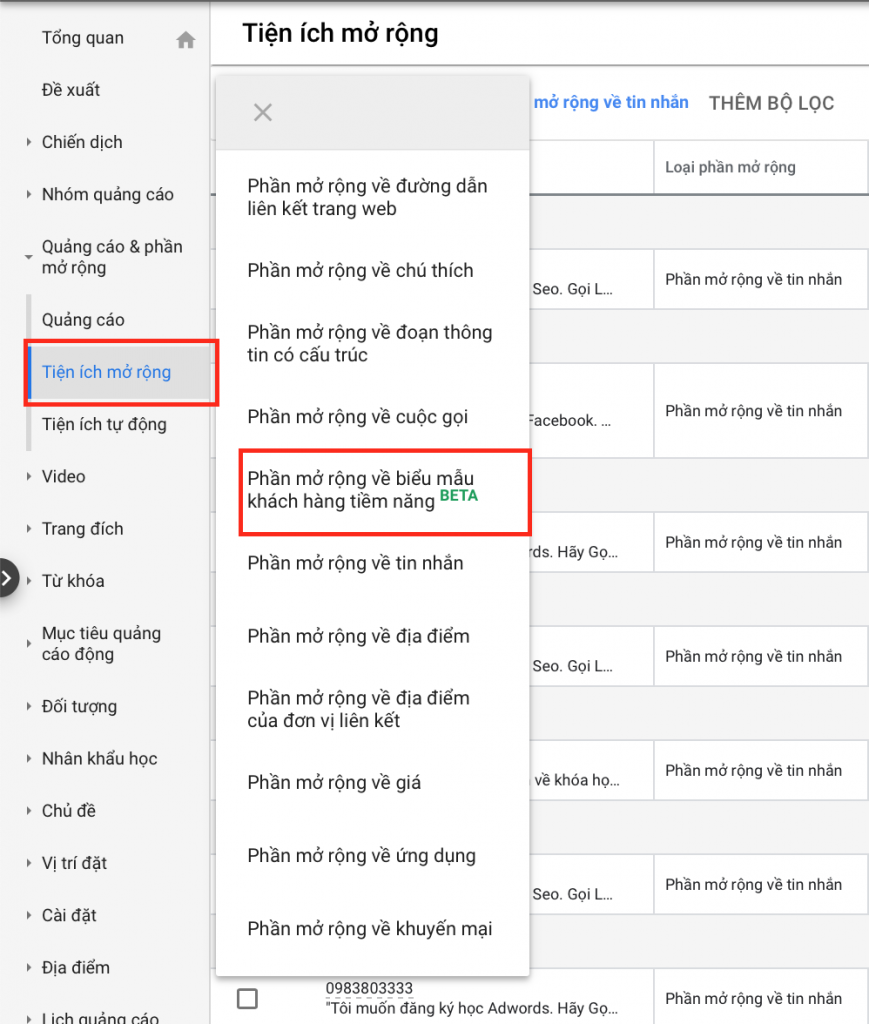
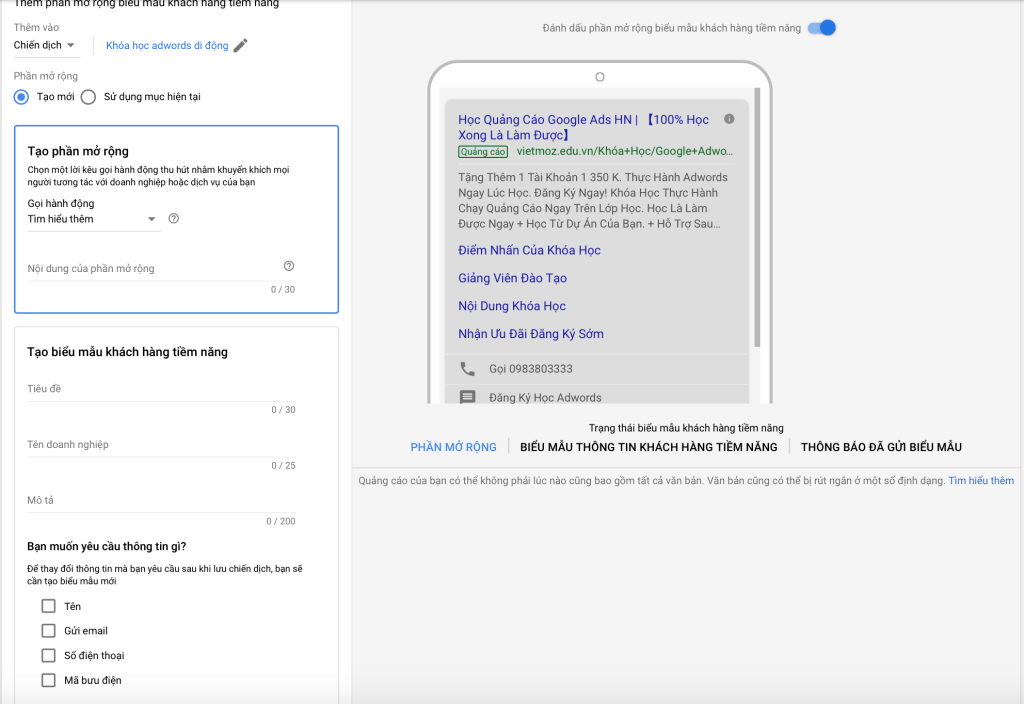
Select from the call-to-action menu and enter descriptive text.
Next, you will create a lead form as shown at the beginning of this article. The form includes a title, business name, and a description of up to 200 characters. Information you can collect is limited to: Name, email, phone number, and postal code. You can add a header image. Finally, you will need to include a link to your privacy policy. Advertisers must also agree to Google's terms of service.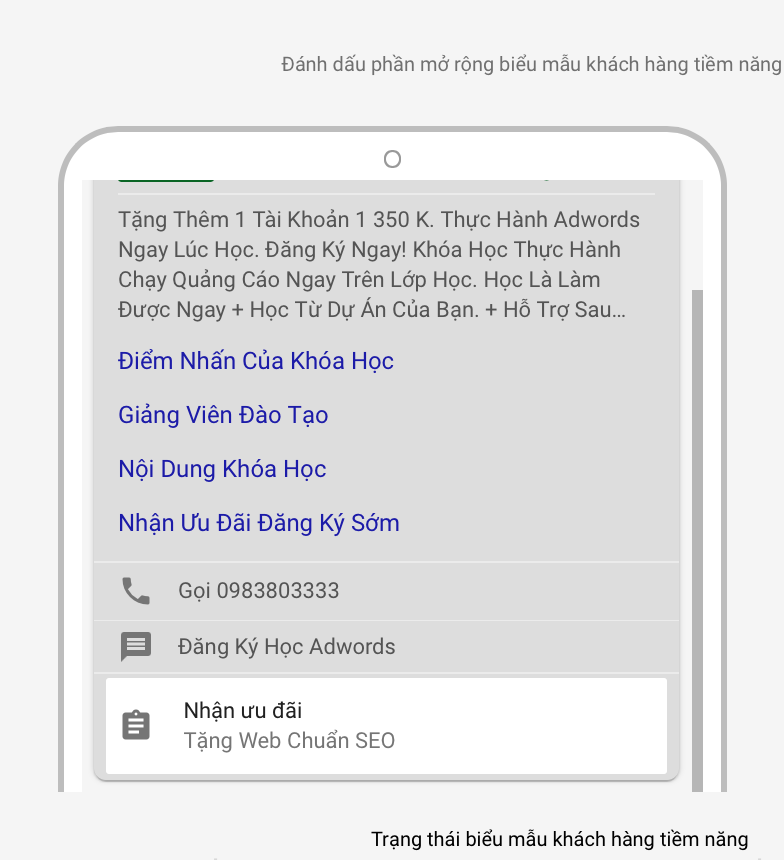 You can customize the submission confirmation page that users will see after they submit the form with a description and call-to-action of either visiting your website or landing page
 Lead data can be sent via webhook to your customer data management or CRM system to directly receive your collected leads in real time.
8. BUMPER ADS: 6 SECONDS TO MAXIMIZE REACH AND BRAND AWARENESS
WHAT ARE BUMPER ADS ON YOUTUBE?
Bumper Ads on YouTube are 6-second video ads that viewers cannot skip when they play before another video on YouTube. This is one of 6 different ad formats on YouTube. Due to the short playback time, Bumper Ads are the most effective advertising method to create brand awareness and reach. Meanwhile, other ad formats such as overlay ads and skippable ads have longer durations so they are more suitable for introducing product features and benefits. Bumper Ads can run as standalone ad campaigns, but Google recommends running them in combination with TrueView ads to increase their effectiveness (for example: Show TrueView ads to first-time viewers, then continue showing Bumper Ads to those viewers to increase reach frequency).HOW MUCH DO BUMPER ADS COST?
Like other YouTube and Google ad types, Bumper Ads operate on an auction model. However, in this case, only CPM (cost per 1,000 impressions) is effective so you will be charged per 1,000 impressions. The exact price will vary based on your target and competition. However, you can set a daily budget and maximum CPM to ensure you don't pay more than your desired cost.HOW EFFECTIVE ARE BUMPER ADS?
In a study of 122 Bumper Ads campaigns in 2017, Google found that 70% of viewers showed significant improvement in brand awareness, with an average increase rate of 9%. Additionally, 9 out of 10 people remember the entire ad, with an average sales increase rate of over 30%. Ad recall is a measure of advertising effectiveness. This data is based on surveying a group of viewers and asking whether they remember the ad.9. Shopping Reviews
You don't need to be a retail expert, but perhaps everyone knowsoneof the main reasons why people still prefer shopping in traditional stores: the ability to touch and try different products. When you go to a store and try on a pair of pants, you can immediately visualize yourself wearing them in different settings at a coffee shop with friends, walking down the street, etc. By allowing customers to understand how their products will impact their daily lives, traditional retailers have a major advantage over e-commerce businesses. That's why Google brings user-generated images. If you use Google Shopping to sell to consumers based in the United States, you can enroll in the product ratings program and create a product review data feed. Using a completely new schema, you will be able to upload photos that your customers have taken directly to Google Merchant Center.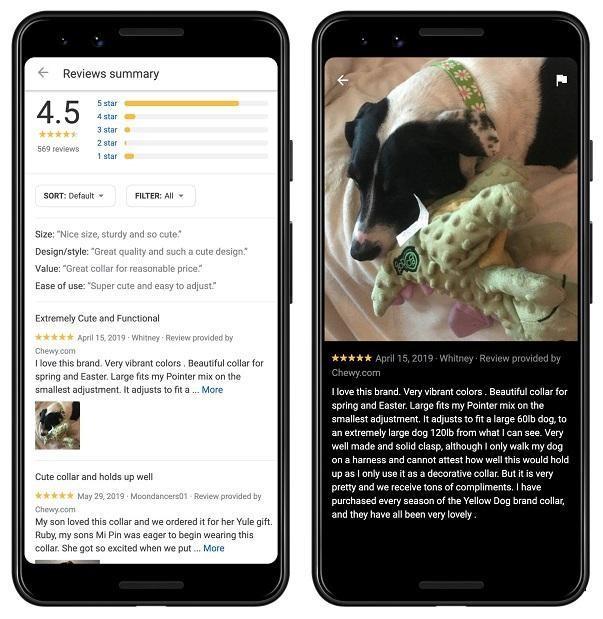 If you're wondering how you can collect user-generated images from your satisfied customers, here's my advice: just ask. With some simple email automation, you can reach all the people who bought something from your online store and (gently) encourage them to submit full reviews with a photo, of course! If you add a little incentive like a promo code, for example, you'll have a killer photo library instantly.
10. Video in Responsive Display Ads
Since its launch in the early part of this decade, the power of responsive display ads cannot be denied—dynamic, eye-catching images and videos that Google automatically optimizes based on webpage content and user screen size. For anyone unfamiliar, here's how they work: You write a few ad templates and submit some visual content; then, Google's algorithm determines which copy/image combination works best depending on the factors mentioned above.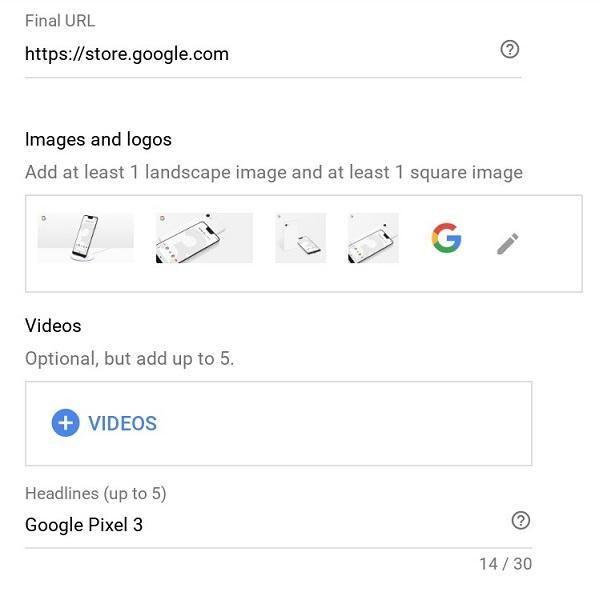 In early 2019, visual content was limited to static images and GIFs. However, now YouTube advertisers can use video content in display ads. Here are three reasons why you should take advantage of this change
- More impressions
- More clicks
- Greater reach
11. Gallery Ads
Last but not least, Google has released a brand new mobile ad gallery announced at Google Marketing Live and currently available as beta to selected advertisers. Here's an example Google distributed on announcement day: As you can see, an ad gallery, when activated, appears at the top of the SERP with a carousel that can swipe through up to eight unique images. Above the carousel is a clickable headline and display URL, and below each image is a brief caption. When you have access to gallery ads, you'll be able to submit three unique headlines for each ad, giving you the ability to test different combinations and CTAs. Google's initial tests showed that gallery ads attracted 25% more engagement (measured by clicks and swipes) compared to standard text ads. Summary: Above are the notable changes in Google Ads for 2019. We hope this information will be helpful to Google advertisers